

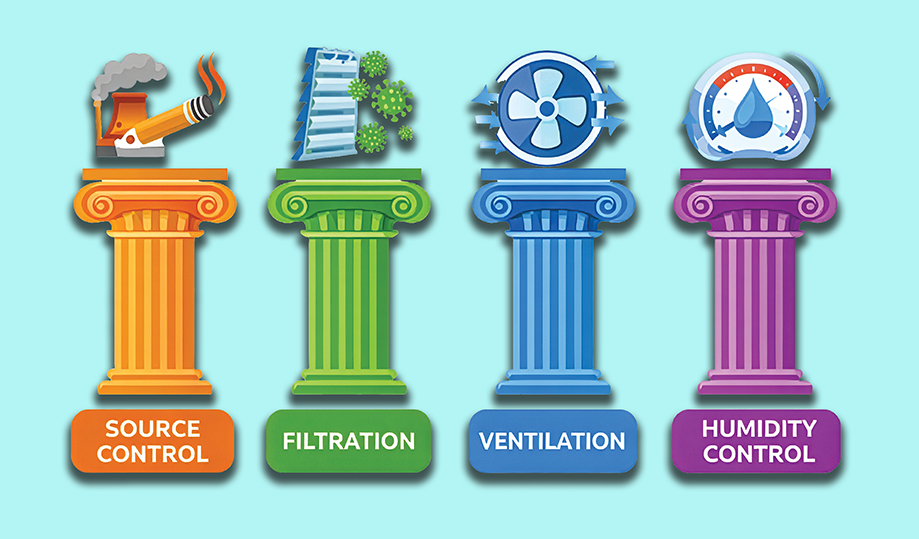
Energy recovery ventilators (ERVs) exchange heat and moisture between incoming and outgoing air streams to reduce the HVAC system’s load. However, they are not 100% effective, meaning some energy is still required to heat, cool, and dehumidify the fresh air.
In humid climates, a ventilating dehumidifier can be particularly effective because it combines ventilation and humidity control pillars. These systems mix outside air with return air and remove excess moisture before introducing the air into the home. This approach helps prevent humidity spikes while still delivering fresh air.
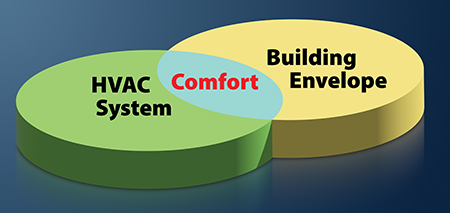
HVAC system and the building envelope.
Another important but often overlooked component of ventilation is air circulation. Even when you install ventilation equipment, poor airflow distribution can allow humidity and pollutants to accumulate in stagnant areas. Pay attention to register selection and placement to ensure good air mixing in the room.
Remind your customers what grandma used to tell us: Go outside and get some fresh air. Then explain that a better approach is to control when and where that fresh air enters the home and bring it in only after it’s been cleaned and conditioned.
Pillar 4: Source Control — Preventing Pollutants from Entering the Home
The final pillar of IAQ is source control, which focuses on preventing contaminants from entering the indoor environment in the first place. Source control is often the most cost-effective strategy because it reduces the workload placed on filtration, ventilation, and humidity control systems. One major source of indoor pollution is air leakage.
Air leaks allow outdoor pollutants, attic dust, crawlspace moisture, and chemical contaminants to enter the building. Sealing these leaks can significantly improve IAQ while also reducing energy loss.
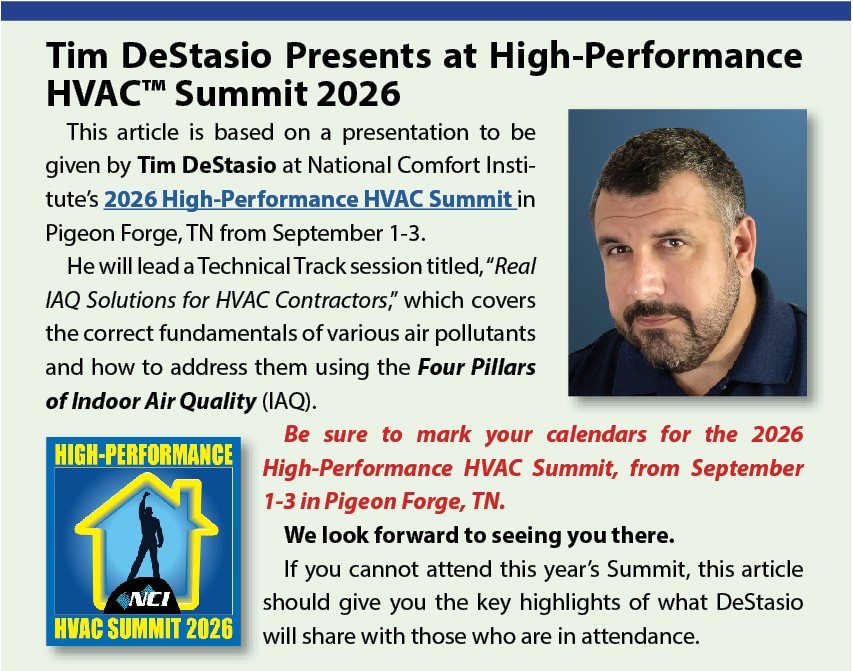
Another major contributor to IAQ problems is building pressure imbalance. When a home becomes negatively pressurized, it can draw pollutants from undesirable areas such as:
- Attics
- Crawlspaces
- Wall cavities
- Garages.
Diagnosing these pressure issues requires micro-manometers and blower door testing, which measure overall building pressure and leakage to identify air-sealing opportunities. I suggest using testing equipment from Retrotec and The Energy Conservatory.
Among the other sources of indoor pollution are common household chemicals used for cleaning, beauty, and paints and varnishes, which all off-gas VOCs.
As HVAC contractors, we may not have the final say on which products our customers use, but we can certainly educate them on making better choices, such as using natural cleaners. We can also strongly encourage them to avoid storing chemicals inside the home’s envelope.
Common source control solutions include:
Click Below for the Next Page:





Recent Comments