

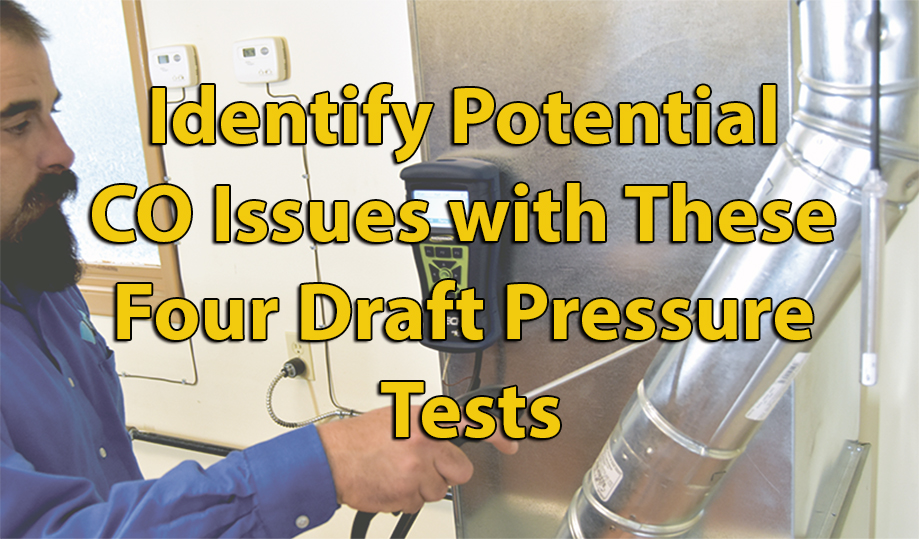
Draft Interference Test
Using this test helps you determine if duct leakage, exhaust fans, or door closure impacts draft pressure. The draft interference test is a continuation of the functional flue test, so the draft gauge and probe remain in their original position for this test.
First, turn on the furnace blower to its highest speed. If draft pressure falls to zero, turn the power off. Return duct leakage or an airflow imbalance is causing draft to drop and can cause flue gas spillage or backdrafting.
Find and correct the airflow problem before proceeding.
Next, turn on exhaust fans, such as kitchen exhaust and clothes dryers, one at a time to see how they affect draft pressure. Any decrease in draft pressure can signal potential flue gas spillage or backdrafting.
If draft pressure decreases, identify which fan or fans are the culprit and consider providing makeup air or pressure relief to account for them.If draft is consistent, start closing interior doors to rooms with supply registers and no return grilles in them.
If the draft pressure decreases, you’ll need to relieve pressure from these rooms. Jumper ducts and transfer grilles are great solutions for this problem.
Flue Restriction Test
The third application of draft pressure testing is to identify potential flue restrictions with natural draft or fan-assisted appliances.
This test will help you evaluate the flue’s performance and identify any obstructions or design flaws that may affect system efficiency. Begin by considering common issues such as deteriorating chimneys, improperly installed liners, or undersized flues.
Also consider whether the flue is correctly sized for proper operation.
Perform this test as you would any other draft test. Leave the draft gauge and probe in the same position as you did for the functional flue and draft interference test.
Let the appliance run for five minutes and record the draft reading. Next, manually turn off the gas line shutoff valve to the appliance and watch the draft reading.
If there is a restriction in the flue, the draft pressure reading will increase for at least 10 to 15 seconds. The draft reading should remain the same and then decrease on a properly sized flue.
Combustion Air Supply Test
And finally, let’s look at the combustion air supply test. You can quickly perform this during a regular combustion test.
A single draft pressure reading can tell you whether there is enough combustion air in a room. If you measure draft pressure of -.02-in. w.c. or greater, there is plenty of available combustion air. It’s that simple. No measuring room volume, duct sizes, or grille dimensions. The measurements let you know if there’s enough combustion air in the room.
Click Below for the Next Page;










Recent Comments