
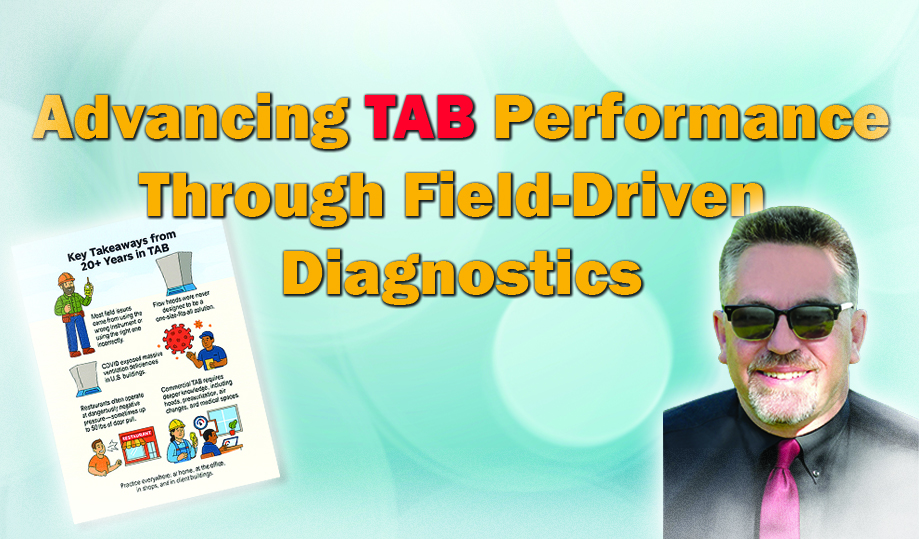
Commercial TAB in hospital applications isn’t “nice to have.” Getting it wrong can jeopardize infection control and patient safety.
According to the U.S. Center for Disease Control, 99,000 Americans die annually from Healthcare Acquired Infections. This is the equivalent of a 275-passenger plane crashing every day!
Getting Started: What Contractors Need to Know
I get asked all the time: How do I break into commercial TAB? Here are three things you’ll need:
— Start with reputable manuals: ASHRAE 111, SMACNA manuals, NEBB, and AABC standards are
foundational
— Invest in proper instruments: For commercial TAB, you’ll need:
- Flow hood with multiple skirts of different sizes (2×4, 1×4, etc.)
- Pitot tube or airfoil
- Velocity grid
- Temperature/humidity probes
- Rotating vane anemometer
- Hot wire anemometer.
— Learn to interpret your readings: A negative discharge static or a positive suction reading is physically impossible — it means something is wrong. Too many technicians simply write the numbers down and move on.
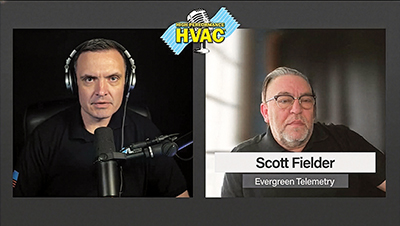
where Instructor Adam Mufich (left) discusses what happens
behind the scenes in commercial testing, adjusting, and balancing
with Evergreen Telemetry’s Scott Fielder (right).
Pricing: Why You Should NOT Be the Low Bidder
TAB is a specialized trade with significant overhead: instrumentation, calibration, certification, reporting software, and highly trained technicians. Yet contractors constantly underprice themselves.
I’ve heard “you don’t understand our market” in every city I’ve worked in — Detroit, Chicago, Miami, Seattle. They all say owners pick the low bid. They don’t. Not always.
In fact, contractors often pay more for reliability.
We often bid $800 minimum for projects that others quoted at $500. Still, we were regularly hired because we delivered reports within 24 hours, communicated issues immediately, and kept projects out of liquidated damages. One mechanical estimator lost a $5,000 Christmas bonus because he chose a cheaper balancer, and the project ran late.
Reliability has value. Expertise is valuable. Don’t price yourself like a commodity when you’re not one.
If You Want to Improve, Practice Everywhere
One of the best pieces of advice I can give is this: Practice at your house, your office, your shop — anywhere you can.
I’ve trained contractors who built TAB skills by balancing their auto shop while getting their oil changed. One tech even discovered a disconnected flex duct above the ceiling, fixed it, and earned a free oil change, all while generating a TAB report for his certification.
Every building is an opportunity to learn.
This Trade Needs More Professionals Who Care
TAB is a challenging, rewarding, and deeply necessary discipline. Buildings need proper ventilation more than ever. Restaurants, hospitals, schools, and commercial spaces depend on technicians who understand how to use instruments and how to apply judgment, interpret results, and ensure systems operate safely and efficiently.
If you’re considering diving deeper into this side of the industry:
- Buy the manuals
- Buy the instruments
- Practice everywhere you can
- And never undervalue your expertise.
This industry needs more professionals who want to do it right the first time and who care enough to get better every day.
If you’re one of those people, there’s plenty of work waiting for you.
Scott Fielder is the Director of Field Operations for Evergreen Telemetry, a Phoenix-based TAB equipment manufacturer. Scott has over 23 years in the TAB industry, including 15 years of field work in Texas and seven years providing TAB training and training development. You can reach him at ncilink.com/ContactMe.



Recent Comments