

HVAC contractors are often called upon to address urgent situations in residential homes. But what truly constitutes an emergency? What should customers expect? How can contractors set themselves apart?
These are questions that occurred to me recently when a very close family member discovered that, after having some much needed repairs to his mechanical equipment, the flue pipe somehow became disconnected. Exhaust fumes containing Carbon Monoxide (CO) could have been spewing into his finished basement!
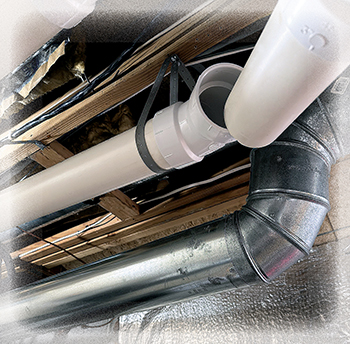
My cousin knew I wrote for an HVAC trade magazine and sent me a picture of what he found. To be honest, I freaked out! I told him to shut off the furnace and open windows to air out the basement. Then I told him to call the contractor and have them come right back out to fix it.
Unbeknownst to me, my cousin decided to temporarily fix the flue pipe himself, then call the contractor. He fitted the separated pipes together, duct-taped them tightly and then called the contractor’s service department.
He was told his repair was good enough until they could come back, which would be in several hours. That was very unacceptable to me.
It just so happened I know the owner of this company and I called him to tell him what was happening. He immediately made some calls and had his service team back out to the house within an hour.
In the meantime, I ran over to my cousin’s house and gave him one of my NSI 6000 Carbon Monoxide monitors which showed no CO. Later, after the professional repair, the CO levels remained at zero. Thank goodness.
Defining Emergencies and Response Time
This scenario certainly raised a bunch of questions for me, so I asked a number of other HVAC contractors their thoughts on what constitutes an emergency.
One respondent, Anthony Kent of Basnett Plumbing, Heating, and Air Conditioning said, “From my perspective, an HVAC emergency is any situation that presents an immediate risk to occupant safety, health, or the integrity of the home, or one that significantly impacts vulnerable populations during extreme conditions.”
He and several other contractor respondents pointed out the importance of clear, concise communications between their team and the customer upfront to prevent panic while ensuring true emergencies rise to the top of their priority list.
But what should you do if a customer tries to make a fix themselves like my cousin? Kent says, it’s all about communication and training.
“Emergency preparedness must be trained across the entire HVAC team,” he says. “Dispatchers need to recognize red flags and ask the right questions. Technicians must be trained in safety protocols, diagnostics under pressure, and communication during stressful situations.
“Emergencies aren’t just technical events — they’re human events — and training has to reflect that,” Kent says.
So if an emergency like CO spills, system failure during extreme temperatures, and other issues happen, no one should think a DIY repair by the customer means they can take their time getting there for the fix.
Plus, in my opinion, such situations shouldn’t need to be elevated to the owner to move things to the top of the priority list.
What are your thoughts on this question? Let me know at ncilink.com/ContactMe.










Recent Comments