


A Real-World Example: The Dayton, Ohio Case
A one-man shop in Dayton, Ohio — Kiefer Thompson — called me one Saturday night around 8:30. He was working on a four-ton system that had been giving his customer headaches for years: noisy ducts, uncomfortable rooms, and poor performance.
He had already replaced the return drop and filter rack, but his static pressure was still 0.97-in. w.c. The ECM blower motor was pulsating, trying to overcome the restriction. At that rate, it wouldn’t last long.
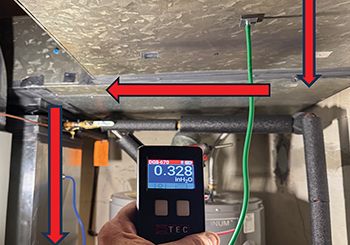
Kiefer and I spent over an hour on the phone reviewing his test results. I told him to look for system effect — places where air changes direction sharply over a short distance. Air hates to do that. See figure 1. Airflow does not like to make three turns within a few feet.
A few days later, he called back. He found it. The return duct made three 90° turns within a couple of feet—a recipe for disaster. The pressure drop across that short section alone was 0.33 in. w.c.!
So, he redesigned the return and added a second return duct. The results?
- Static pressure dropped from 0.97 to 0.57 in. w.c.
- Airflow increased to 391 CFM per ton
- The pulsation stopped
- Noise disappeared
- The system operated as designed.
The homeowner was thrilled and ended up replacing the furnace as well. That’s what I call turning high static pressure into a high-performance sale.
Selling Without “Selling”
You don’t need to push. You don’t need gimmicks. When you test, document, and present the data to customers, the numbers sell the job for you.
Here’s how to make that happen on your next call:
- Measure total external static pressure on every system you touch
- Use simple analogies like blood pressure to make it relatable
- Identify restrictions using static pressure budgets
- Show the customer the data
- Offer options—not ultimatums
- Follow up and show you care about long-term performance.
The Real Message
Testing and diagnostics aren’t just technical skills — they’re communication tools. When you measure, you show professionalism. When you explain what those measurements mean, you build trust. And when you fix the root cause instead of the symptom, you create raving fans.
Click for the Next Page:







Recent Comments