

I run a growing residential HVAC company in Montreal, Canada. We’re only five years in, and early on I made a decision that changed everything: I decided to build the business around measured performance — not brand names, not box swaps, not prices.

That single choice reshaped our sales, seasons, team culture, and our reputation with both homeowners and other contractors.
I didn’t come into this with decades of airflow expertise. I’m still learning every day. But once I started investing in training classes with organizations like National Comfort Institute (NCI) and using real testing and measuring instruments on every call, I finally had the proof I needed to communicate problems and solutions in a way homeowners could see and trust.
Where the Profits Really Are: The Return Side
If you ask me where Air Upgrades deliver the biggest win, I’ll point to the return every time. On retrofits we repeatedly find the same story: a nice, wide 20×20-in. duct at the trunk shrunk down to an 8×10 inches somewhere in the run, then flared back to 20×20 inches at the filter rack.
That choke point is the villain behind a lot of comfort complaints and ECM motor failures, and it’s also where we create outsized value for clients and profit for our company.
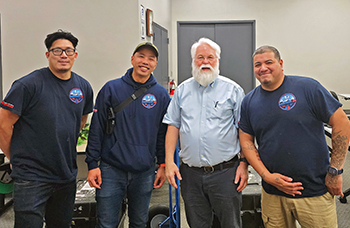
members of his team train with National Comfort Institute’s
Paul Wieboldt (center right) on load calculations and airflow.
In my market, most systems have rigid ducts located in basements. So, while we don’t do a ton of flex duct fixes, we do a lot of return drop rebuilds.
Those jobs are straightforward, repeatable, and high impact: lower static pressures, healthier motors, better comfort.
Proof Builds Trust and Trust Builds Sales
Our approach is simple: measure first, explain with visuals, and then prescribe solutions. I bring The Energy Conservatory (TEC) reports and NCI’s “blood pressure” chart into every conversation.
When a homeowner sees their return static sitting in the red and then sees the equivalent “stage” on the chart, the light bulb comes on. Suddenly airflow and static aren’t abstract — they’re real, and they’re affecting both comfort and equipment life.
That’s when people say, “No one’s ever shown me this before,” and it naturally leads to the right upgrade scope.
I’ll give you a favorite example. A homeowner called after multiple contractors had replaced ECM motors twice in four years. Now the third motor failed. We measured airflow and found the filter rack and return were way too tight.
Click Below for the Next Page:







Recent Comments